


As a little girl I loved hearing ghost stories (I still do). This tragic story I'm about to tell is of my dad's. I have always thought that my dad just made it all up, until I heard it from another relative. So on to the story.
This happened way back when my dad was still in grade school. I think he was just about 10 or 11 then. Back then the land where my house is standing now was the shore. Nothing but sand and sea. After coming home from school my dad and his friends would go straight to the water and catch some fish (the water was just knee high and they use their bare hands), given on account that their houses were just a few meters away and times was hard then, kids had to work for food.
So after a few hours of catching fish, it was finally getting dark. My dad and two of his friends stayed behind because of the luck they're having, good catch don't come often.
One of dads friend, Pepe, ventured a little far from my dad and his other friend. Having too many fish to hold, he decided to put one in his mouth, head first! Which is not a good idea, and he found that out a little later. When the fishes tail touched the water, when he bent down to search for more fish, it started to wiggle, and it being in his mouth, pushed itself to Pepe's throat. My dad and his other friend suddenly noticed Pepe struggling to breath.
My dad ran to Pepe and tried everything to pull the fish out of Pepe's mouth but he couldn't, the fishes head (the blade like thingy that opens when they breath) kept on hooking on his tonsils. The other friend panicked and ran away (so much of a friend).
So my dad was left there with his dying friend. My dad didn't know what to do but he had the mind to carry Pepe on his back to look for help. While walking or running he felt his friend getting heavier and heavier. To make it shorter Pepe died on my dads back.
So here's the scary part. After all that has happened my dad somehow got the chance to forget about that ordeal. But not long after forgetting. One night he woke up to take a whizz, on the way to the bathroom he heard a faint voice not sure who or what it was he stopped and he listened, it got louder and clearer, calling my dad. It was saying "condring" (my dads nickname) "help me" "help me". Horror-stricken my dad turned his head to where the sound was coming from. There and then he saw his dead friend all pale with both arms raised reaching asking for help. My dad ran to his parents room. And since then he never went to pee on his own.
Sorry for the long story I have the tendency to be specific. Hope you enjoyed it somehow.
Source : http://www.yourghoststories.com/
More Stories: http://blackboxmystery.blogspot.com/
Monday, 4 June 2012
Search for harmful Asian carp
Search for harmful Asian carp in Chicago area turns up nothing
Wednesday, March 31, 2010
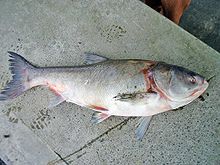 Illinois officials announced Monday that a six-week search for Asian carp in Chicago waterways has turned up no sighting of the dreaded fish. The statement comes over a month after electric barriers were placed in local canals to block the fish from entering Lake Michigan.
Originally from Asia, the carp have infested portions of the Mississippi and Illinois Rivers and several Chicago-area waterways. Failing to keep the fish away from the Great Lakes could severely damage the $7 billion fishing industry there.
The Illinois Department of Natural Resources, along with U.S. Fish and Wildlife Service and U.S. Army Corps of Engineers biologists, placed netting and electric stunning prods in areas where the carp were most likely to gather, about 25 miles away from Lake Michigan. A six-week search since then has resulted in none of the undesirable silver or bighead carp, but rather over 1,000 common carp and other harmless variations.
The State of Michigan, along with the Great Lakes States of Minnesota, Wisconsin, Indiana, Ohio, Pennsylvania and New York and the Canadian Province of Ontario, has requested an injunction to shut down two Chicago canals leading into lake Michigan. The US Supreme Court has twice rejected that request.
Although no Asian carp has since been found, the Michigan Attorney General still wants the locks closed. "What did they expect? [Illinois'] own court filings say they are not likely to catch Asian carp using nets or electro-fishing," said spokesman John Sellek. Illinois and the White House oppose closing the locks, claiming that doing so would harm the Chicago-area barge and tour boat industries.
Biologists plan to keep searching for Asian carp over the next three months.
Sources
- "Illinois Officials Say No Asian Carp Present In Lake Michigan" — WHTC, March 30, 2010
- John Flesher. "6-week search finds no Asian carp near Chicago" — Associated Press, March 30, 2010
- Marcus Gilmer. "Asian Carp AWOL?" — Chicagoist, March 30, 2010
Mahi-mahi(Dolphin Fish)
Mahi-mahi(Dolphin Fish)
| Mahi-mahi | |
|---|---|
 | |
| Scientific classification | |
| Kingdom: | Animalia |
| Phylum: | Chordata |
| Class: | Actinopterygii |
| Order: | Perciformes |
| Family: | Coryphaenidae |
| Genus: | Coryphaena |
| Species: | C. hippurus |
| Binomial name | |
| Coryphaena hippurus Linnaeus, 1758 | |
Being referred to as a "dolphin",[2][3] causes it to be confused with the more widely known marine mammals called dolphins.
The name mahi-mahi means very strong in Hawaiian. In other languages the fish is known as lampuga, lampuka, lampuki, rakingo, calitos, or maverikos.
Nomenclature
The common English name of dolphin causes much confusion. This fish is not related to the marine mammals also known as dolphins (family Delphinidae). Additionally, two species of dolphinfish exist, the common dolphinfish (Coryphaena hippurus) and the pompano dolphin (Coryphaena equiselis). Both these species are commonly marketed by their Pacific name, mahi-mahi.The fish is called mahi-mahi in the Hawaiian language.[4] "Mahi mahi" and "mahi-mahi" are commonly used elsewhere.[2]
Linnaeus named the genus, derived from the Greek word, koryphe, meaning top or apex, in 1758. Synonyms for the species include Coryphaena argyrurus, Coryphaena chrysurus and Coryphaena dolfyn.[1]
General characteristics
Mahi-mahi have compressed bodies and long dorsal fins extending nearly the entire length of their bodies. Their caudal fins and anal fins are sharply concave. They are distinguished by dazzling colors: golden on the sides, and bright blues and greens on the sides and back. Mature males have prominent foreheads protruding well above the body proper. Females have a rounded head. Females are also usually smaller than males.
Out of the water, the fish often change color among several hues (giving rise to their Spanish name, dorado maverikos, "golden maverick"), finally fading to a muted yellow-grey upon death.
Mahi-mahi are among the fastest-growing fish. They spawn in warm ocean currents throughout much of the year, and their young are commonly found in seaweed. Mahi-mahi are carnivorous, feeding on flying fish, crabs, squid, mackerel, and other forage fish. They have also been known to eat zooplankton and crustaceans.
Males and females are sexually mature in their first year, usually by 4-5 months old. Spawning can occur at body lengths of 20 cm. Females may spawn two to three times per year, and produce between 80,000 and 1,000,000 eggs per event.
In waters above 34 °C, mahi-mahi larvae are found year-round, with greater numbers detected in spring and fall. In one study, seventy percent of the youngest larvae collected in the northern Gulf of Mexico were found at a depth greater than 180 meters. Spawning occurs normally in captivity, with 100,000 eggs per event. Problems maintaining salinity, food of adequate nutritional value and proper size, and dissolved oxygen are responsible for larval mortality rates of 20-40%. [3] Mahi-mahi fish are mostly found in the surface water. They feed on Sargassum weeds. Their flesh is soft and oily, similar to sardines. The body is slightly slender and long, making them fast swimmers; they can swim as fast as 50 m/min.
Recreational fishing
Main article: Mahi-mahi fishing
Mahi-mahi can be found in the Caribbean Sea, on the west coast of North and South America, the Pacific coast of Costa Rica, the Gulf of Mexico, the Atlantic coast of Florida, Southeast Asia, Hawaii and many other places worldwide.
Fishing charters most often look for floating debris and frigatebirds near the edge of the reef in about 120 feet (37 m) of water. Mahi-mahi (and many other fish) often swim near debris such as floating wood, palm trees and fronds, or sargasso weed lines and around fish buoys. Sargasso is floating seaweed that sometimes holds a complete ecosystem from microscopic creatures to seahorses and baitfish. Frigatebirds dive for food accompanying the debris or sargasso. Experienced fishing guides can tell what species are likely around the debris by the birds' behavior.
Thirty- to fifty-pound gear is more than adequate when trolling for mahi-mahi. Fly-casters may especially seek frigatebirds to find big mahi-mahis, and then use a bait-and-switch technique. Ballyhoo or a net full of live sardines tossed into the water can excite the mahi-mahis into a feeding frenzy. Hookless teaser lures can have the same effect. After tossing the teasers or live chum, fishermen throw the fly to the feeding mahi-mahi. Once on a line, mahi-mahi are fast, flashy and acrobatic, with beautiful blue, yellow, green and even red dots of color.
Commercial fishing
The United States and the Caribbean countries are the primary consumers of this fish, but many European countries are increasing their consumption every year.[citation needed] It is a popular eating fish in Australia, usually caught and sold as a by-product by tuna and swordfish commercial fishing operators. Japan and Hawaii are significant consumers. The Arabian Sea, particularly the coast of Oman, also has mahi-mahi. At first, mahi-mahi were mostly bycatch (incidental catch) in the tuna and swordfish longline fishery. Now they are sought by commercial fishermen on their own merits.In French Polynesia, fishermen use harpoons, using a specifically designed boat, the poti marara, to pursue it, because mahi-mahi do not dive. The poti marara is a powerful motorized V-shaped boat, optimized for high agility and speed, and driven with a stick so the pilot can hold his harpoon with his right hand.
See also Lampuki, for Commercial Fishing of the species in Malta
Environmental and food safety concerns
- The Monterey Bay Aquarium classifies mahi-mahi, when caught in the US Atlantic, as a Best Choice, the top of its three environmental impact categories. The Aquarium advises to Avoid imported mahi-mahi harvested by long line but rates troll and pole-and-line caught as a Good Alternative.
- The Natural Resources Defense Council (NRDC) classifies mahi-mahi as a "moderate mercury" fish or shellfish (its second lowest of four categories), and suggests eating six servings or fewer per month.[5]
- The Environmental Defense Fund (EDF) classifies mahi-mahi caught by line/pole in the US as "Eco-Best" in its three-category system,[6] but classifies all mahi-mahi caught by longline as only "Eco-OK" or "Eco-Worst" due to longline "high levels [of] bycatch, injuring or killing seabirds, sea turtles and sharks." [7]
References
- ^ a b "Coryphaena hippurus". FishBase. http://www.fishbase.org/Summary/SpeciesSummary.php?id=6. Retrieved 16 August 2011.
- ^ a b "Common names of Coryphaena hippurus". Fishbase. http://www.fishbase.org/comnames/CommonNamesList.php?ID=6&GenusName=Coryphaena&SpeciesName=hippurus&StockCode=1884. Retrieved 16 August 2011.
- ^ a b Bostwick, Joshua (2000). "Coryphaena hippurus". Animal Diversity Web. http://animaldiversity.ummz.umich.edu/site/accounts/information/Coryphaena_hippurus.html. Retrieved August 17, 2011.
- ^ Mary Kawena Pukui and Samuel Hoyt Elbert (2003). "lookup of dolphin". in Hawaiian
More Stories: http://blackboxfishtalk.blogspot.com/
Fishing Boat
Recreational vessels

Big game fishing started as a sport after the invention of the motorized boat. Charles Frederick Holder, a marine biologist and early conservationist, is credited with founding the sport in 1898.[52] Purpose built game fishing boats appeared shortly after. An example is the Crete, in use at Cataline Island, California, in 1915, and shipped to Hawaii the following year. According to a newspaper report at that time, the Crete had "a deep cockpit, a chair fitted for landing big fish and leather pockets for placing the pole."[53]
It is difficult to estimate how many recreational fishing boats there are, although the number is high. The term is fluid, since most recreational boats are also used for fishing from time to time. Unlike most commercial fishing vessels, recreational fishing boats are often not dedicated just to fishing.
- Fishing kayaks have gained popularity in recent years. The kayak has long been a means of accessing fishing grounds.
- Pontoon boats have also become popular in recent years. These boats allow one or two fishermen to get into small rivers or lakes that would have difficulty accommodating larger boats. Typically 8–12 ft in length, these inflatable craft can be assembled quickly and easily. Some feature rigid frames derived from the white water rafting industry.
- Bass boats are small aluminium or fibreglass boats used in lakes and rivers in the U.S. for fishing bass and other panfish. They have swivel chairs for the anglers, storage bins for fishing tackle, and a tank with recirculating water for caught fish. They are usually fitted with an outboard motor and a trolling motor.
- Charter boats are often privately operated, purpose-built fishing boats, and host fishing trips for paying clients. Their size can range widely depending on the type of trips run and the geographical location.
- Freshwater fishing boats account for approximately one third of all registered boats in the USA. Most other types of boats end up being used for fishing on occasion.
- Saltwater fishing boats vary widely in size and can be specialized for certain species of fish. Flounder boats, for example, have flat bottoms for a shallow draft and are used in protected, shallow waters. Sport fishing boats range from 25 to 80 feet or more, and can be powered by large outboard engines or inboard diesels. Boats used for fishing in cold climates may have space dedicated to a cuddy cabin or enclosed wheelhouse, while boats in warmer climates are more likely to be open.
 Fly fishing from a dinghy

 Small sport fishing boat
Recreational boat fishing
Inshore
Inshore boat fishing is fishing from a boat in easy sight of land and in water less than about 30 metres deep. The boat can be as small as a dinghy. It can be a row boat, a runabout, an inflatable or a small cabin cruiser. Inshore boats are typically small enough to be carried on a trailer, and are much more affordable than offshore fishing boats. In recent times fishing from a kayak has become popular.Anglers either use an uptide rod between 9 and 10 feet in length to cast from the boat or a shorter downtide rod between 6 and 8 feet. Lines are usually between 18 pounds and 50 pounds breaking strain dependent on the species of fish being targeted. Reels are usually multipliers, although fixed spool reels are being used more and more. Baits are similar to those used for beach and rock fishing except they are often larger since larger fish are targeted. The species will include all the beach species, but now also include big conger eels and small sharks like tope and smoothhound.

 Fishing dingy in Switzerland
 Fishing from a boat on the Doubs River, France
 An angler in a float tube plays a pike.
Offshore
Offshore boats are generally much larger than inshore boats, and may need to be moored in a marina. They are sturdily constructed so they can brave the weather and water conditions encountered in open waters. Though they differ in design and purpose and prices vary widely they are generally expensive to build and maintain. Most offshore recreational fishermen charter boats rather than own them. It is often a pastime of the affluent, and there is a demand for charter boats equipped and catered to luxurious excess.
Offshore game fish, like marlin and tuna, can be very large and heavy tackle is needed. Fishing is usually done with sea rods, such as downtide rods, with lines of 30 to 50 pounds and multiplier reels. Baits are the same as for inshore fishing and include squid and whole mackerel as well as artificial lures such as perks. Fishing takes place over reefs and wrecks for very large cod, ling and congers.

 Small sport fishing boat
 Larger charter boat in Bermuda
- /
 On the bridge of a sport fishing boat in Long Island Sound
Source: http://en.wikipedia.org/
More Stories: http://blackboxfishtalk.blogspot.com/
Study: Fish reduces Alzheimer's disease risk
Study: Fish reduces Alzheimer's disease risk
Wednesday, November 30, 2011
Consumption of grilled or baked fish at least once a week can preserve the brain structure of seniors and reduce the risk of developing Alzheimer's disease by three to five times, according to the results of a recent US study.
The study, conducted by the University of Pittsburgh School of Medicine in Pennsylvania, asked 260 volunteers with an average age of 76, about the frequency of their fish consumption. Ten years later, brain scans were carried out on those being researched. Those who regularly ate fish were found to have better preservation of parts of the brain related to memory. An additional five years later, 31% of those who did not regularly consume fish contracted mild cognitive impairment or Alzheimer's disease. Of those who ate fish at least once a week, between three and eight per cent contracted the aforementioned medical conditions.
According to The Daily Telegraph, consumption of grilled or baked fish increases the intake of Omega 3 fatty acids, providing a greater amount of blood flow to the brain; therefore prompting a reduction in inflammation and internal gathering of plaque encountered in the lead-up to Alzheimer's disease. Fried fish does not reduce the risk of contracting Alzheimer's disease due to the low amount of Omega 3 it contains.
Dr. Cyrus Raji, who took leadership of the study, called it "the first study to establish a direct relationship between fish consumption, brain structure and Alzheimer's risk." Raji concluded that "people who consumed baked or [grilled] fish at least one time per week had better preservation of grey matter volume on MRI in brain areas at risk for Alzheimer's disease."
The Alzheimer's Society's research manager, Dr. Anne Corbett, stated: "This moderately sized study adds weight to existing evidence suggesting that eating fish reduces your risk of developing cognitive decline." However, she contested these findings, saying they "did not account for lifestyle factors such as other foods or exercise", which may have affected the overall outcome. Dr. Corbett advised consumers to "eat a healthy diet including fruit and vegetables along with taking regular exercise and giving up smoking" to reduce the risk of contracting dementia.
Meanwhile, Alzheimer's Research UK lead researcher, Dr. Simon Ridley, believed the study had not clarified "whether other underlying factors may have contributed to the lower risk in people who eat fish." There is "a clear need for more conclusive research into the effects of dietary fish on our cognitive health," according to Dr. Ridley.
The results of the study are to be presented today at the annual meeting of the Radiological Society of North America.
Consumption of grilled or baked fish at least once a week can preserve the brain structure of seniors and reduce the risk of developing Alzheimer's disease by three to five times, according to the results of a recent US study.
The study, conducted by the University of Pittsburgh School of Medicine in Pennsylvania, asked 260 volunteers with an average age of 76, about the frequency of their fish consumption. Ten years later, brain scans were carried out on those being researched. Those who regularly ate fish were found to have better preservation of parts of the brain related to memory. An additional five years later, 31% of those who did not regularly consume fish contracted mild cognitive impairment or Alzheimer's disease. Of those who ate fish at least once a week, between three and eight per cent contracted the aforementioned medical conditions.
HAVE YOUR SAY
|  |
Do you think there is a link between fish consumption and mental health?
| |
Dr. Cyrus Raji, who took leadership of the study, called it "the first study to establish a direct relationship between fish consumption, brain structure and Alzheimer's risk." Raji concluded that "people who consumed baked or [grilled] fish at least one time per week had better preservation of grey matter volume on MRI in brain areas at risk for Alzheimer's disease."
The Alzheimer's Society's research manager, Dr. Anne Corbett, stated: "This moderately sized study adds weight to existing evidence suggesting that eating fish reduces your risk of developing cognitive decline." However, she contested these findings, saying they "did not account for lifestyle factors such as other foods or exercise", which may have affected the overall outcome. Dr. Corbett advised consumers to "eat a healthy diet including fruit and vegetables along with taking regular exercise and giving up smoking" to reduce the risk of contracting dementia.
Meanwhile, Alzheimer's Research UK lead researcher, Dr. Simon Ridley, believed the study had not clarified "whether other underlying factors may have contributed to the lower risk in people who eat fish." There is "a clear need for more conclusive research into the effects of dietary fish on our cognitive health," according to Dr. Ridley.
The results of the study are to be presented today at the annual meeting of the Radiological Society of North America.
Sources
- Nick Collins. "Fish could protect against Alzheimer's" — The Daily Telegraph, November 30, 2011
- "Weekly fish lowers Alzheimer's risk" — Press Association, November 30, 2011
Fishing Adventures in Naples
Fishing Adventures in Naples 
By Jan S. MaizlerArticle & Travel EditorPhotos By Jan S. Maizler & Jeff Legutki
 It looked like our skiff would be swallowed by a solid wall of mangroves, but Captain Jeff Legutki banked the Hell's Bay Whipray into a leftward arc, revealing a good sized "cathedral"-style opening right in our trajectory about forty feet off our bow. As my sigh of relief tapered off, we flew into the portal, which began our watery path through the cool shadows of these large trees, all of them so spidery-looking with their multi-footed roots.
The backcountry bouquet rose up, full of sulphur, mud, leaves, tannin, and salt. The sound of Jeff's outboard engine kept a sustained whine as he expertly snaked through the turns of the canopied canal.
Though Jeff seemed to know this "beat", he offered me a smiling aside of " maybe we're getting lost", fully knowing my preference for open expanse flats- not all this encroachment! Moments later, his next turn to the right showed an opening out of the bush, which gave way to an open expanse of a turquoise-colored bay.
As soon as we left the mangroves, Jeff eased back his throttle, then cut and tilted up his engine. Suddenly we were wrapped in the surround sound of silence, save for the occasional syrupy plops of wavelets on the hull. It seemed that nearby Naples was a million miles away.
Jeff grabbed his pushpole and climbed up on the poling tower over his engine. He said it was still early enough to try "topwaters" for snook and motioned for me to grab a braid-loaded spinning outfit topped off with a Storm Chug Bug. He began poling us towards a small canal not far from the opening that we'd come out of. The spot looked like an ideal ambush area as it spewed an ebb tide that would transfer backcountry forage into the open bay. As we slowly got within proper casting distance, I could easily imagine my plug disappearing in a big "toilet-flush" suction-style strike. But this was already the second day of our adventure and a tale properly told ought to begin at the start.
Beginnings
 I became aware and made contact with Jeff through his thorough fishing reports on CyberAngler. Jeff's writing made it clear he was an ardent inshore and shallow water fly and artificial lures captain. Perusing his excellent web site sealed the deal for the next step in giving him a call to fish the abundant waters of Naples and the Everglades.
In my talks with Jeff, I found out that he maintained a very busy schedule of guiding for snook, redfish, and tarpon in a twelve-year career that mixed long productive hours on the pole along with the joys of fatherhood. Jeff told me that he fishes about 90 per cent fly fishermen and 10 per cent spin/light tackle anglers. His guiding season from Thanksgiving to July was out of Chokoloskee, July and August in the Keys and around Florida with the World Angling Production team, and September through October from Pine Island down to the Glades for the fall tarpon and redfish bite. He made it perfectly clear that it was the action that would determine where he would trailer his Whipray to the final daily fishing and guiding efforts.
Jeff is also a core crewmember of the World Angling fly fishing production team. After I screened their video productions, I came to the conclusion that their vision goes further than the fly fishing life. It is also an homage to the sight fisherman's inspired pursuit of wild fish in wild places. So much of their work features exciting, tack-sharp footage, great sound tracks, and the kind of unpretentious, full-bodied humor that shatters the older stuffed-shirted pretensions. I loved their vision and the day-to-day life they epitomize.
Between both of our hectic schedules, we finally were able to set aside a Friday and Saturday in August 2010. Though we both knew that weekdays would more surely guarantee success, these were the best days I could come up with because of my other responsibilities. It bears repeating that these plans were made months in advance, since Jeff as well as other top guides are sometimes booked a year in advance. I reserved my accommodations at the lovely Bellasera hotel in Naples. It was also a logistic relief to know that Jeff and the Bellasera would be a straight "shot" across Florida from Fort Lauderdale to Naples via Alligator Alley.
Day 1
 We began our first day getting an early start so we could try for tarpon in the dark as well as during the sunrise "bite period." We launched a bit south of Naples in the Rookery Bay area. All it took was a short idle to the large bridge a hundred yards away and we could see tarpon blasting minnows that were being swept with the outgoing tide. We tossed all size lures at them, but they were reluctant to strike. Jeff was sure that a small fly would probably get some eats, but at my request we moved on.
We hit some dock lights that resulted in some big ladyfish releases. Since the sun was rising, Jeff fired up and headed west into the backcountry to try for some laid-up and rolling tarpon. We got to that location within fifteen minutes and soon Jeff was poling me towards some small rolling tarpon. I was rigged with a small topwater plug resembling the old Zara Spook. I made some good casts and had quite a few excellent strikes over the next hour. Both of us knew that a bucktail would have gotten more hookups, but the plugs were just too much fun to switch from.
As the sun rose up, the tarpon seemed to disappear. Jeff fired up and headed for the open Gulf and the adjacent beaches. In seemingly little time we were casting into schools of showering minnows close to the sand. We did not hook any snook here, but we caught good numbers of mackerel and ladyfish.
We finished the six-hour day by working some schools of small snook inside Keewaydin Island. We released a good number of the linesiders on a small paddletail swimbait that looked just like a minnow. By then, the heat was oppressive and I asked Jeff to call it a day.
Day 2
As Jeff launched his skiff the next morning, I was encouraged to hear his announcement that we'd focus on snook. Before sunrise, we bypassed the bridge tarpon and headed for some dock lights. Interestingly, most of the homes had the "snook lights" off or the bulbs were burnt out. We saw a few fish, had some strikes and a few releases. We even caught some big hard-fighting ladyfish as the sun came up, but Jeff knew he'd have to head west into the mangrove country to try for snook while the light was low. In contrast to the live bait guides, Jeff has to fish certain flies and lures based on lighting and water conditions, so too much sun would force us to go to sub surface plastic swimbaits.We might still be able to use topwater plugs, but we'd have to get there fast. And Jeff did so, which brings us back to that tempting little canal. Jeff broke into my daydreaming about "toilet-flush" suction-style strikes by telling me we were close enough for me to cast. My first cast landed in the center of the opening and I slowly popped it back to our skiff. Jeff asked me to cast it to one side of the canal and more into the shadows of the mangrove branches.
My next cast followed his orders and on the second pop, the plug disappeared in a big splash. I waited for the weight of the fish to pull the rod tip and then I struck it hard. The fish tried to run into the roots, but I dug my rod tip into the water and fast stroked it back out. During my battle, I saw Jeff cast to that sweet spot and hook up quickly himself. Soon, we were both releasing snook in the six-pound class.
We released a few more snook from that spot, but then Jeff pulled his pushpole out of the mud and poled towards another canal opening. We released about six more snook from our new honey hole. This became the pattern for hunting down those marvelous gamesters that morning. Two highlights were a massive yard-wide strike under my plug that would not return and Jeff's losing a very large snook to the mangrove roots. By the time the sun was brutally hot, we released about 15 to 20 snook. I was grateful to call it a day and look forward to another trip with Jeff in his shallow water paradise.
Bellaserra Hotel
 The marvelous Bellasera hotel is inspired by the cultures and ambiance of Tuscany, Italy. It features 100 studio, one-, two-, and three-bedroom suites. There are comprehensive features and offerings here: courtyard and waterfall, heated swimming pool and whirlpool spa, sundeck with cabanas, poolside food and beverage service, fitness center, 24-hour room service, catering for private meetings, large boardroom and extensive meeting space, business center, gift shop and Esterra Spa. And, much more.
Our suite at the Bella Sera was exquisite and left nothing to be desired. The cuisine at ZiZi Restaurant was excellent as were the beverages and service. Clearly, this property is a five-star destination and I'd gladly go back tomorrow. The Bella Sera is perfectly located in Naples, making it close to all of this wonderful city's offerings.
About Naples
Naples is one of Florida's flagship cities and one of this state's most elite and multifaceted vacation and residential venues. Its' beaches are world renowned for offering a huge sugar-sand expanse that comes into full regalia during sunsets that offer the best colors of rainbows.Naples has some of the finest hotels in the world, which are supplemented by a variety of lodges that appeal to the entire spread of traveling international or American families and/or friends. This wonderful city concentrates on areas of shopping, art galleries and restaurants that are endless sources of fun, pleasure, and adventure that will surely make lifetime memories. Golfers will find super courses and nature lovers have the marvelous Everglades close at hand for exploration and world-class fishing.
Contact Data
Captain Jeff LegutkiNaples, Florida
Phone: 239-293-1664
Web Site: http://www.naplesfloridaflyfishing.com/
Bellasera Hotel
221 9th Street South
Naples, Florida 34102-6258
Reservations: 888-612-1115
Hotel Telephone: 239-649-7333
Web Site: http://www.bellaseranaples.com/
Naples, Marco Island, and Everglades CVB
Web Site: http://www.paradisecoast.com/
Article Source: http://www.cyberangler.com/
Sunday, 3 June 2012
Atlantic goliath grouper
Atlantic goliath grouper
| Atlantic goliath grouper | |
|---|---|
 | |
| Conservation status | |
| Scientific classification | |
| Kingdom: | Animalia |
| Phylum: | Chordata |
| Class: | Actinopterygii |
| Order: | Perciformes |
| Family: | Serranidae |
| Genus: | Epinephelus |
| Species: | E. itajara |
| Binomial name | |
| Epinephelus itajara (Lichtenstein, 1822) | |

Description
Young goliath grouper may live in brackish estuaries, canals, and mangrove swamps, unusual behavior among grouper.
Goliath grouper eat crustaceans, other fish, octopuses and young sea turtles. Grouper are preyed upon by large fish such as barracudas, moray eels and large sharks.
Reproduction
Goliath grouper are believed to be protogynous hermaphrodites, with individuals first maturing as females and only some large adults becoming males. Most grouper follow this pattern, but it has not yet been verified for the goliath.[3] In fact, Bullock et al. found males could be sexually mature at smaller sizes (~1150 mm) and younger ages (4–6 years) than females (~1225 mm and ~6–8 years).[4]Terminology
The goliath grouper is commonly known as the jewfish; however, in 2001 the Committee on Names of Fishes, a seven-member joint committee of the American Society of Ichthyologists and Herpetologists and the American Fisheries Society made the decision to changeSource: http://en.wikipedia.org/
More Stories: http://blackboxfishtalk.blogspot.com/
Warming oceans
Warming oceans make it harder for fish to breathe
From Wikinews, the free news source you can write!
Sunday, January 7, 2007
Global warming has caused oceans around the world to rise in temperature making it increasingly difficult for fish to breathe, say scientists at Alfred Wegener Institute for Polar and Marine Research located in Germany.
In the past 50 years, temperatures in the Baltic Sea have risen causing oxygen levels in the water to decrease.

 A Greater Eelpout.
A study was performed on shallow-water eelpouts, a fish with a large head which looks much like an eel, that showed that the creatures required more oxygen. With the decreased levels of oxygen, the eelpouts are literally gasping for air and causing the number of eelpouts to decrease.
"When you say I get less oxygen in, then I have less oxygen available for aerobic energy and I have less energy for the diverse tasks that a species needs to fulfill in an ecosystem, such as being ready to prey, grow, move and reproduce. It's a general weakening of the individual once it is going beyond its thermal limitation", said Hans Pörtner, an animal physiologist and ecologist.
Although the study only focused on the eelpouts, scientists say that the problem affects all fish and overfishing could occur.
"There is relatively strong evidence that the cod in the North Sea find it too warm to maintain high productivity. When the fishing industry maintains the same high fishing pressure—that has not been a problem before—with the lower productivity, this turns into overfishing," added Pörtner.
Scientists also state that the declining numbers in the eelpouts and fish does not mean that they will become extinct.
"It doesn't mean that the species will go extinct necessarily, but it means they will move. If temperatures are going to change in [the] future, then it will have a major impact on the distribution of animals," said a zoophysiologist at the University of Aarhus in Denmark, Tobias Wang.
Recently, the United States Department of Interior announced that they may add the polar bears to the list of threatened species. Also recently, a Canadian Arctic ice shelf broke away from Ellesmere Island. Both issues are said to have been caused by global warming.
Global warming has caused oceans around the world to rise in temperature making it increasingly difficult for fish to breathe, say scientists at Alfred Wegener Institute for Polar and Marine Research located in Germany.
In the past 50 years, temperatures in the Baltic Sea have risen causing oxygen levels in the water to decrease.

"When you say I get less oxygen in, then I have less oxygen available for aerobic energy and I have less energy for the diverse tasks that a species needs to fulfill in an ecosystem, such as being ready to prey, grow, move and reproduce. It's a general weakening of the individual once it is going beyond its thermal limitation", said Hans Pörtner, an animal physiologist and ecologist.
Although the study only focused on the eelpouts, scientists say that the problem affects all fish and overfishing could occur.
"There is relatively strong evidence that the cod in the North Sea find it too warm to maintain high productivity. When the fishing industry maintains the same high fishing pressure—that has not been a problem before—with the lower productivity, this turns into overfishing," added Pörtner.
Scientists also state that the declining numbers in the eelpouts and fish does not mean that they will become extinct.
"It doesn't mean that the species will go extinct necessarily, but it means they will move. If temperatures are going to change in [the] future, then it will have a major impact on the distribution of animals," said a zoophysiologist at the University of Aarhus in Denmark, Tobias Wang.
Recently, the United States Department of Interior announced that they may add the polar bears to the list of threatened species. Also recently, a Canadian Arctic ice shelf broke away from Ellesmere Island. Both issues are said to have been caused by global warming.
Sources
- David Biello. "Fish Fin?: How Climate Change Is Hurting Cold Water Fish" — Scientific American, January 4, 2007
- Sara Goudarzi. "Warmer Seas Leave Fish Gasping" — LiveScience.com, January 4, 2007
Subscribe to:
Posts (Atom)